
Beyond retention: nurturing talent in Public Administration
Insights | 16 March, 2026

Over the years we have collaborated with a growing number of public administrations who are eager to embrace new ways of working. The public sector has long had a reputation as sluggish and unattractive for dynamic talent. The tide is changing but a lot still remains to be done. In this first article of our series about Public Administration challenges, we look at some of the structural aspects that may shed light on this subject.
When collaborating with public administrations on their ways of working, we often meet highly committed people who care deeply about their work, but feel constrained by structures that don’t yet create best conditions for growth, collaboration, or innovation. Today, the real challenge for public organisations isn’t just attracting talent… but creating the right conditions for them to thrive.
Retaining talent is not anymore about keeping purpose alive. In a world of rising expectations, complex structures and shifting workforce values, talent retention is less a question of loyalty and more a matter of organisational adaptability. For a public administration to truly succeed, the focus should be on building a more resilient organisation and, above all, empowering the individuals who keep it running. This isn’t tied to better desks, free snacks, or a single day of home-office; it’s about giving inspired talents a reason to stay.
Talent retention in the public sector has become a growing concern: according to the ACCA Global Talent Trends 2024, even though public sector staff show the lowest rate of mental health suffering across different activity sectors (52%)1, the same survey participants also display the highest belief that in order to develop their skills they need to leave their current organisation (5 in 10)2. This is a huge liability and potential brain drain.
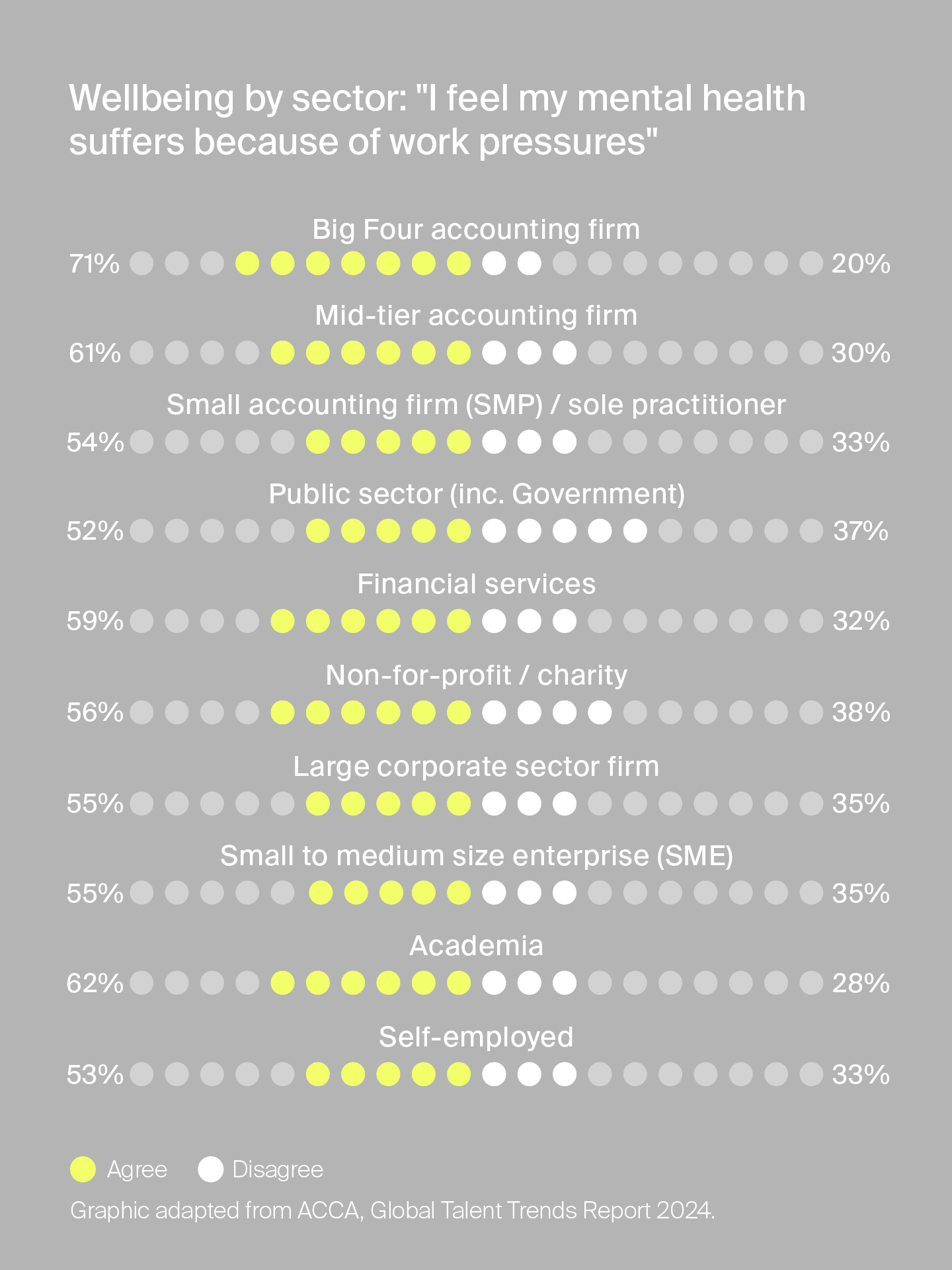
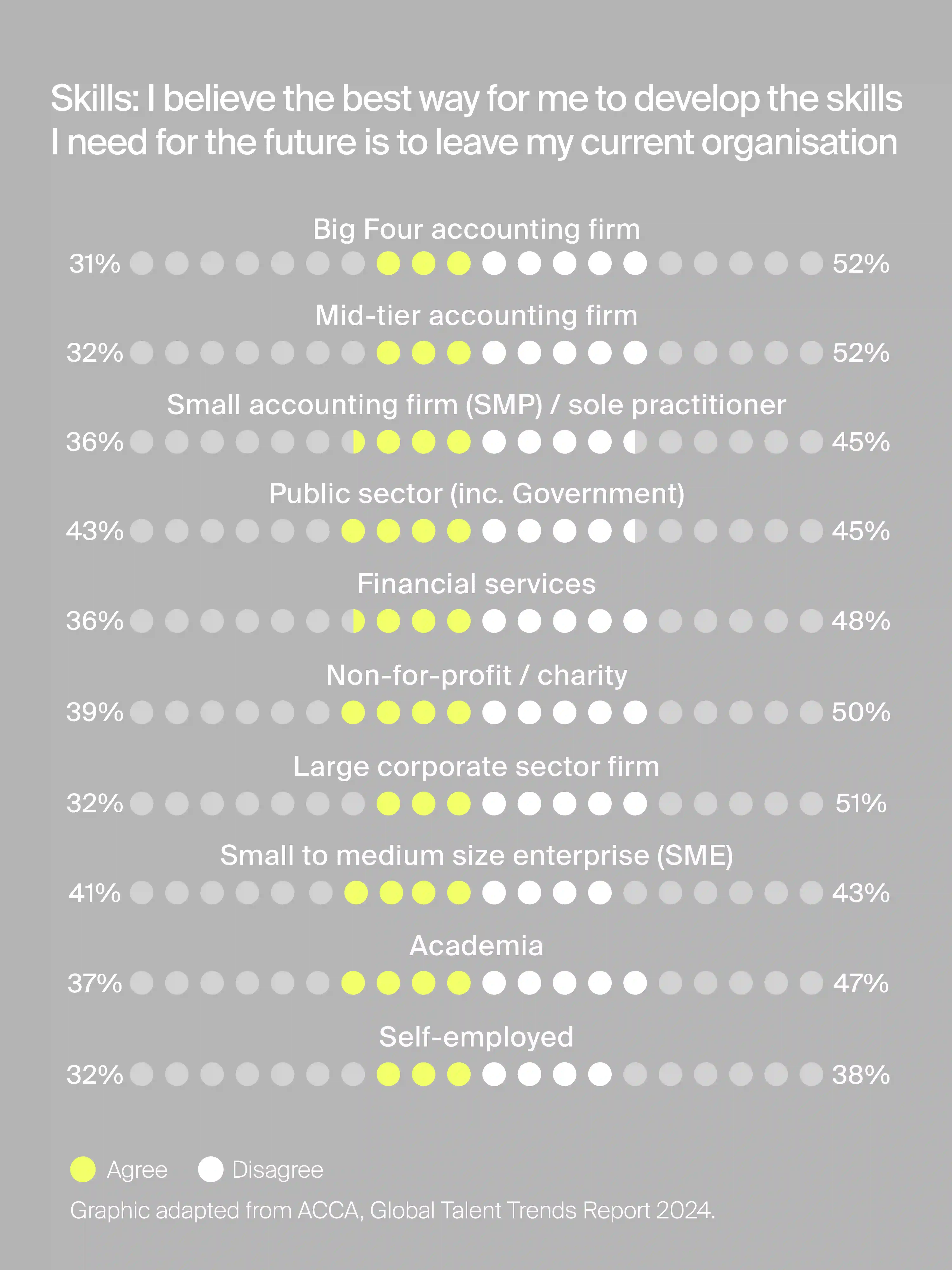
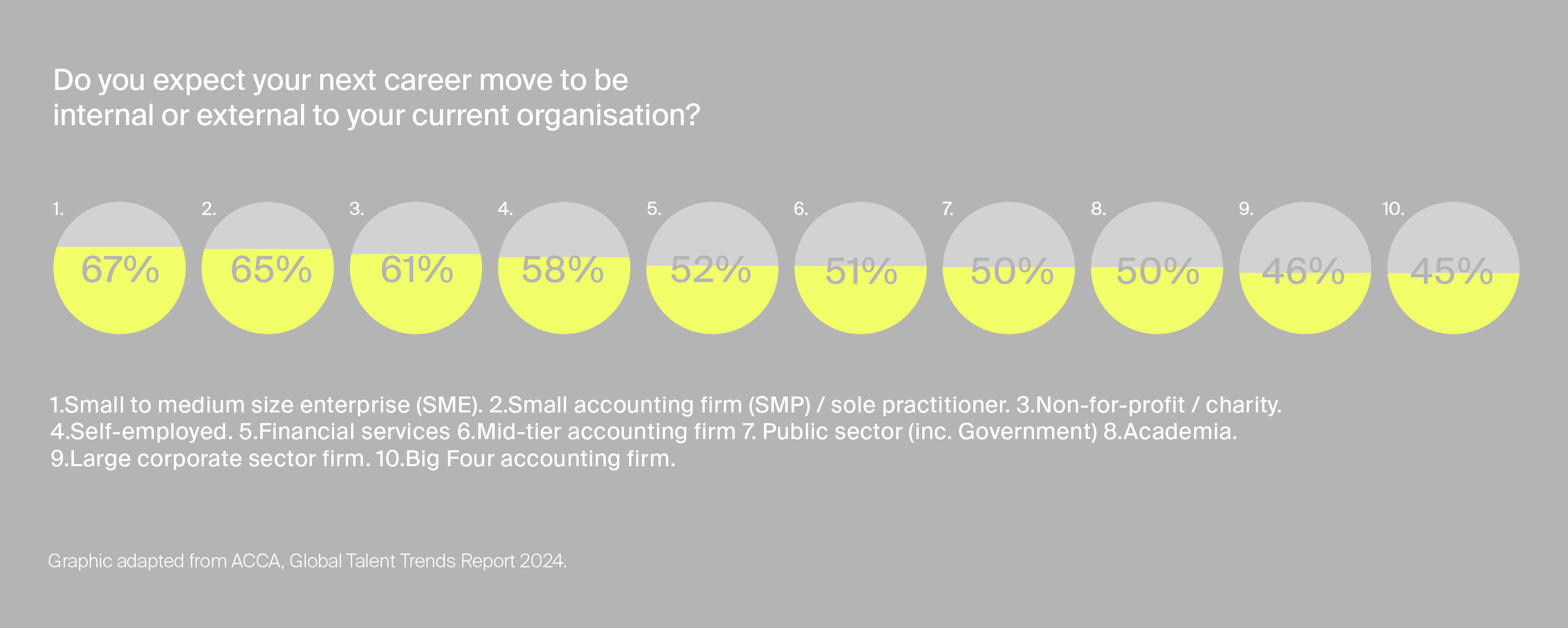
While turnover is often explained by individuals seeking new opportunities, the underlying drivers point to deeper organisational dynamics. Recent OECD/EU reports highlight the gap: “only 41% of public servants believe their organization uses resources efficiently” 3, and “59.7% of employees in extra-large public organisations believe that existing rules and procedures make it difficult to work effectively and efficiently” 4.
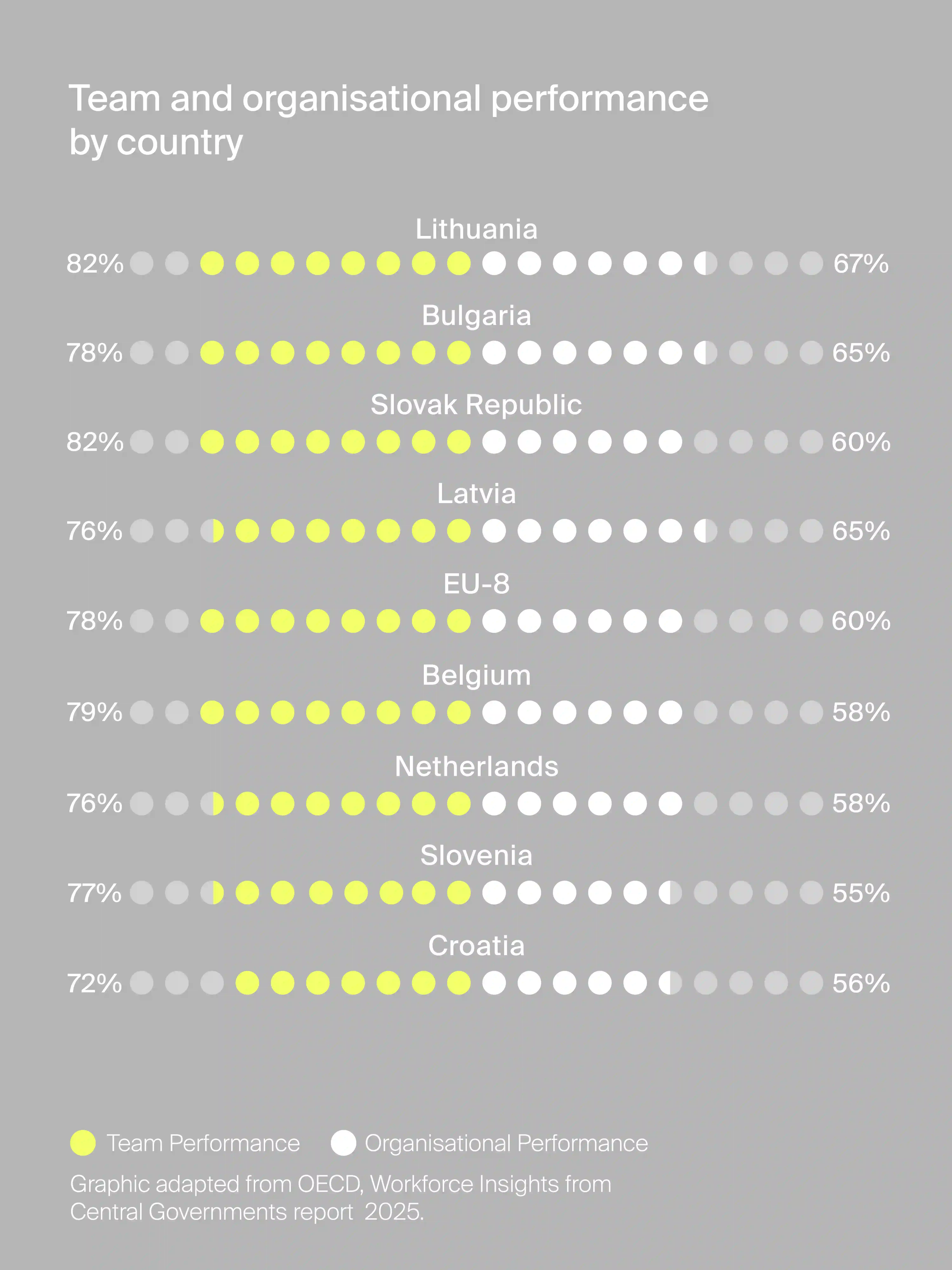
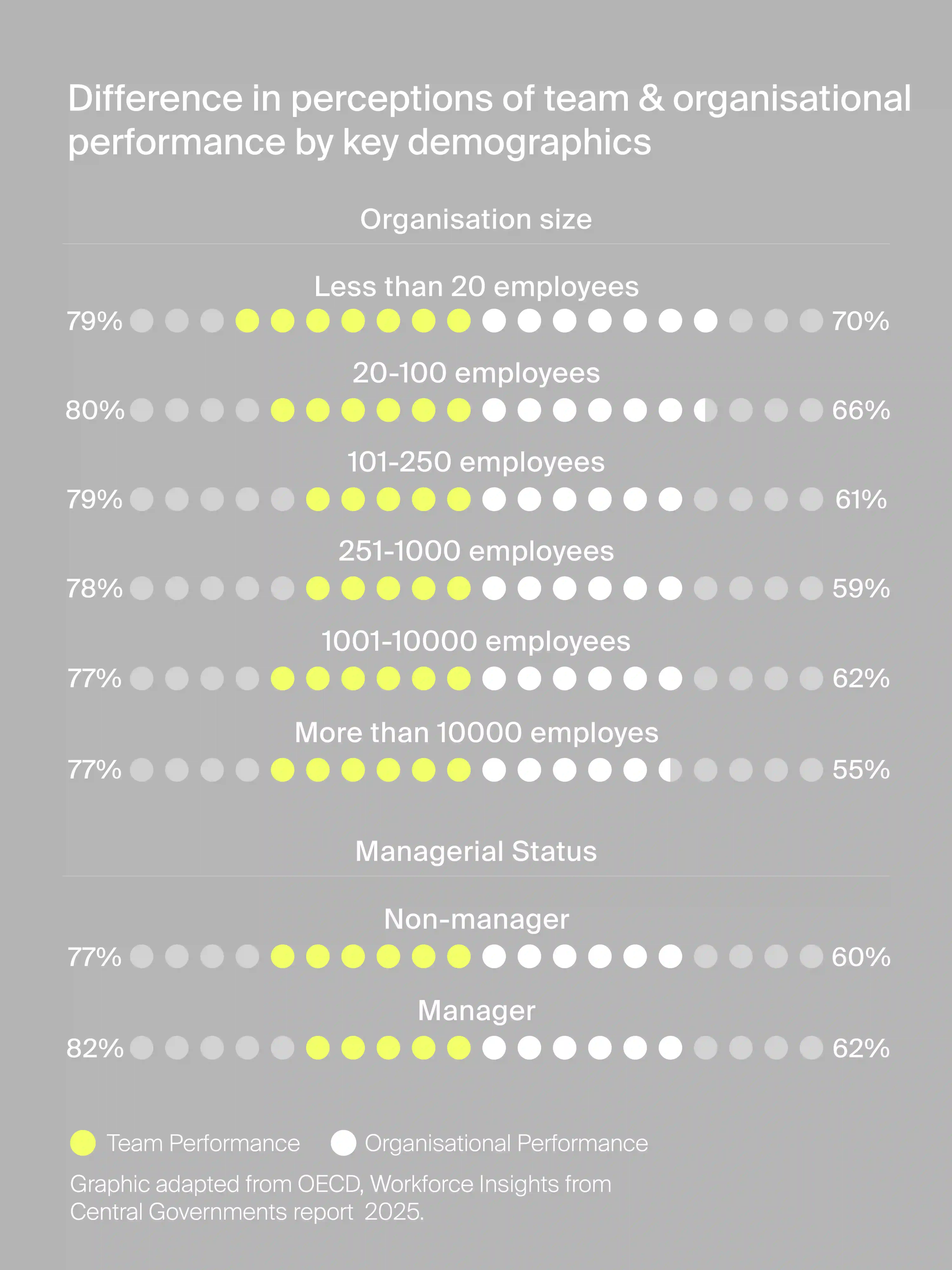
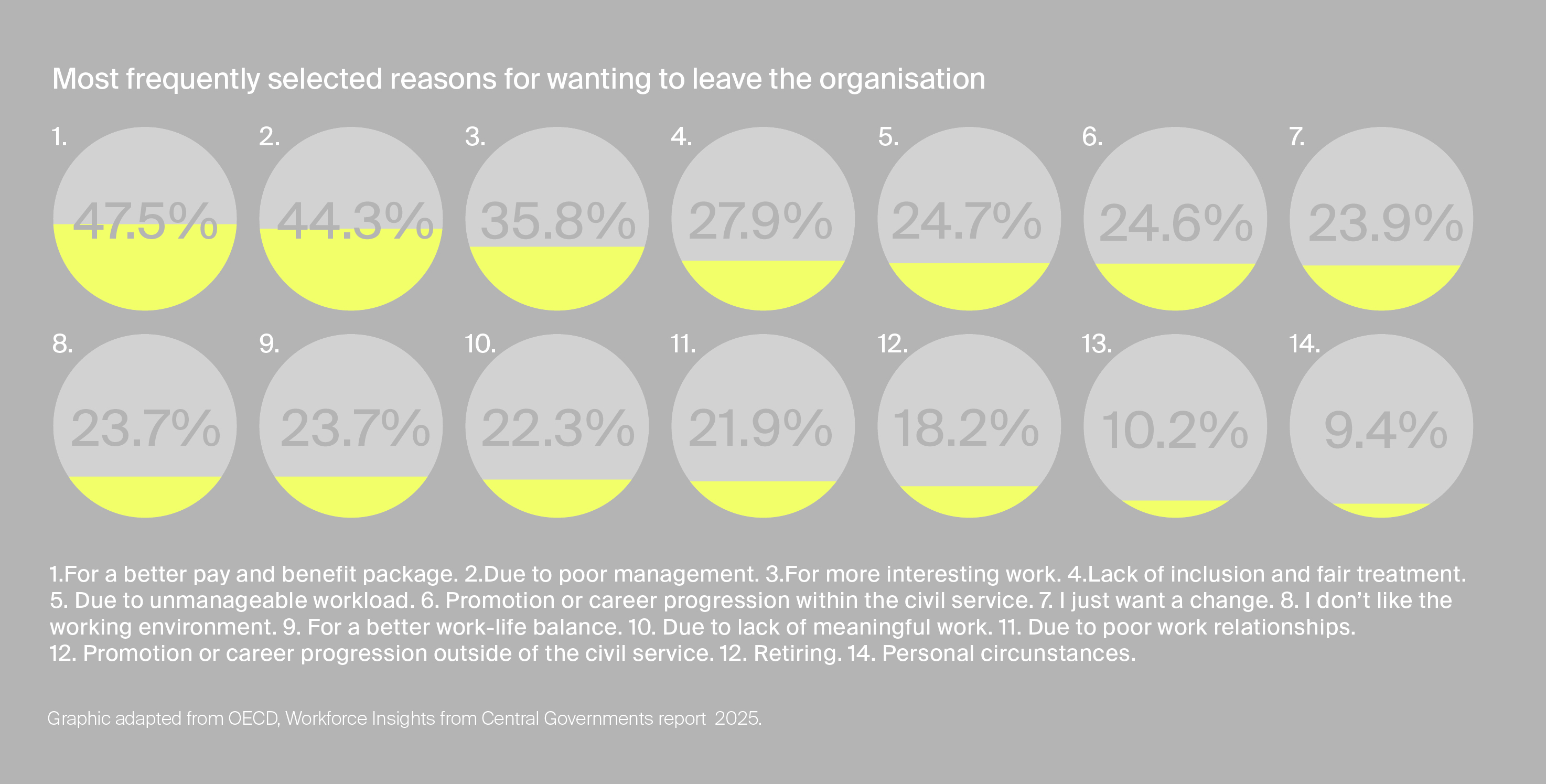
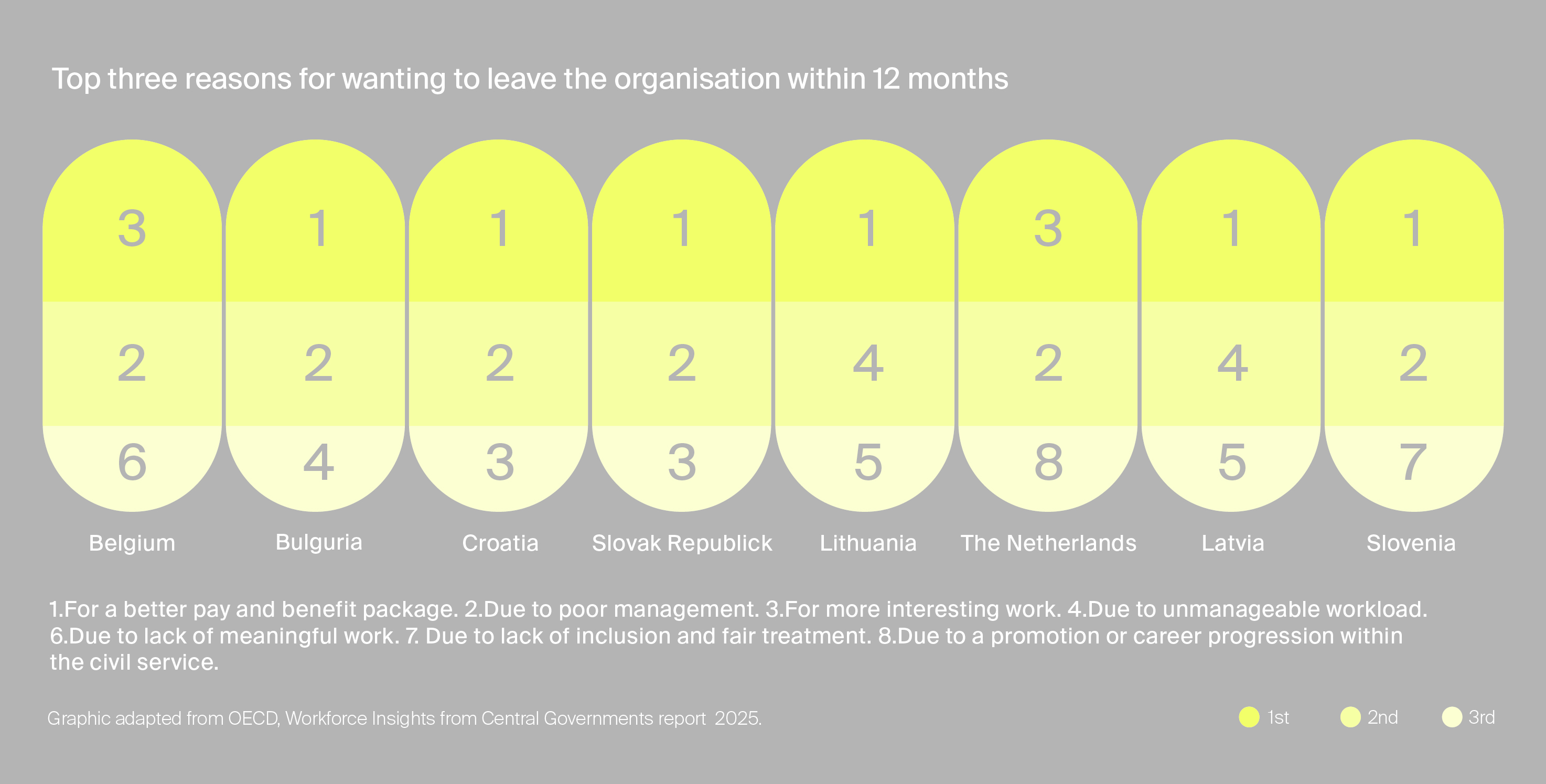
Further reasons why people leave are often rooted in organisational conditions rather than individual ambition. Across roles and departments, talent begins to disengage when it feels stuck in cultures where conflicts remain unresolved, leadership lacks clarity, or career paths appear opaque and inequitable. According to the OECD’s Workforce Insights from Central Governments (2025) 5 Management quality and workload balance are among the strongest predictors of employee engagement and well-being. When job demands consistently outweigh available resources, mental energy is gradually drained. This does not always lead to immediate resignation. Instead, it often results in declining discretionary effort (going the extra mile), increased presenteeism, and absenteeism. Early indicators of disengagement that can precede both burnout and eventual turnover. In fact, 44.3% of public servants report considering leaving due to poor management, underscoring how structural conditions shape retention outcomes.
Retention strategies should be multigenerational
At the same time, a growing generational gap is challenging organisations. The divide is not only technological, but also behavioral and cultural. Different generations bring different assumptions about hierarchy, communication, speed, and even what “commitment” means. This creates a wider spectrum of expectations in the spaces they all share; from the workplace to the public space.
Younger employees may bring different expectations around growth and progression, although experiences and motivations naturally vary. For some, purpose alone is not sufficient. When it is not accompanied by visible career pathways and opportunities for digital upskilling, public administrations may find it more challenging to retain early-career talent in an increasingly dynamic labour market. ACCA’s Global Talent Trends reports 6 point to a growing interest among younger generations in mobility and diverse career paths. Aspirations that can sit uneasily within more traditional or rigid structures. This tendency can be particularly visible among those entering the workforce after apprenticeships, who often look for environments that offer both development and flexibility as they shape their professional direction.
What is often overlooked is the gradual erosion of shared ‘common sense’, across generations. Those born in the 1980s and earlier still share many reference points: similar media landscapes, slower technological change, more stable institutional frameworks. But with gaps of just 15–20 years today, commonalities shift dramatically. Digital realities, social norms, and value systems evolve so quickly that mutual understanding can no longer be assumed. Instead, it needs to be intentionally cultivated through dialogue, observation, and continuous learning about how diverse people experience their work. This also raises an important question for organisations serving the common good. Should public administrations strive for uniformity, or can a workforce that does not “dance to the same beat” actually strengthen their capacity to serve society? Cognitive diversity – the coexistence of different perspectives, experiences, and ways of thinking – can become a powerful resource when it is intentionally harnessed rather than suppressed.
For public institutions – and, increasingly, for any organization involved directly or indirectly in delivering public services – this means the challenge is not simply attracting young talents to stay or retaining experienced staff. It is about actively bridging cultures by creating environments, policies, and leadership models that acknowledge these differences while rebuilding shared ground. Without that effort, polarization grows. With it, diversity of generations can become a strategic advantage bringing together a multitude of experiences and perspectives to enrich the effectiveness, innovation, and public value.
The upskilling paradox
The current state of the world also faces a “development dilemma” where a paradoxical tension exists: according to the OECD Recommendation on Public Service Leadership and Capability 7 managers often fear that upskilling staff makes them more marketable to the private sector, thus more likely to leave. Ironically, not giving people room to grow (or underusing their skills) is often what drives them away. This tension can create an invisible barrier between existing staff and new talent, slowing investment in development out of fear of losing people.
Challenging the paradigm: the "complementary advantage”
Having a team of highly marketable people is actually a sign of institutional excellence. However, the public sector isn’t built to ‘compete’ with the private sector in a traditional sense; but to be a complementary, and equally attractive place to build a career.
While the private sector offers one kind of career path, public administration presents a unique environment of mission-driven impact. Rather than framing the conversation as a competition, the focus should be on rebalancing: building a public workplace that confidently leverages its own strengths, evolves its culture, leadership, and career models and embraces innovation to meet contemporary expectations. By creating a ‘unified roadmap’ for talent care, the goal isn’t to beat the private sector, but to provide a high-value alternative that supports a sustainable, future-ready career journey, including environmental responsibility as part of long-term resilience.
The direction: A skills-first approach
Effective retention requires balancing empowerment and engagement with sincere, consistent execution of purpose-driven strategies. People stay when leaders are open and supportive, growth opportunities feel fair, and recognition is genuine. According to the OECD (2025) report, “Workforce Insights from Central Governments: Findings of the 2024 OECD/EU Survey of Public Servants”, it is proven that higher employee engagement (often fueled by growth and development) is linked to an 80.1% lower likelihood of employees wanting to leave 8.
Trust and equitable development are key to keeping talent motivated, committed, and thriving; with a staff feeling empowered to suggest ideas within an environment where it is “safe to fail”. Team commitment is strengthened when organizations adopt a “learning culture” that doesn’t punish fast-paced mistakes but encourages experimenting methodologies. Based on our experience, the use of “innovation hubs”, lab models or simply integrating co-creative processes in operational as well as strategic organisational development fields further enhances professional satisfaction by allowing people to work outside rigid hierarchies. At a larger scale, for example, several progressive cities have pioneered “Citizen Labs” to bridge the gap between bureaucracy and the public, allowing citizens, designers and city officials to co-design, prototype and test urban services in real-time. Good examples from different perspectives include for instance the Policy Lab initiative in the UK, the Bloomberg Center for Cities at Harvard University focusing on leadership initiatives, or the Participation & Interaction Model in the city of Helsinki as an applicable tool.
Physical tokens or artefacts can also help support this shift, but they are only effective when paired with a change in mindset and a shared set of common understandings or rules (etiquettes, protocols, a corner, etc.) and ways of working that align with a clear vision and strategy.
Training, and career development are essential for making the public sector a modern, people-focused employer. But staff also need motivation and support from the organizational culture. To help talent thrive, leaders should act as sponsors and role models, encouraging the development of key soft skills like negotiation, networking, and collaboration. True leadership means guiding team members, helping them ask the right strategic questions, and find meaningful answers in their work.
It’s not just about retaining talent, it’s about nourishing it
While retention focuses on averting people from leaving, the real opportunity lies in creating conditions where people can genuinely flourish and are empowered to shape the future for themselves as well as the organisation actively. A nourishment approach can help cultivate a working ecosystem where people grow, feel valued, and see a future for themselves within the organization.
The success of these initiatives depends on clear and transparent communication structures and a clear framework of impact that enable staff to participate, share feedback, drive and engage in continuous organizational improvement. When people feel heard and involved, engagement increases, strengthening both organisational performance and collective cohesion.
In summary, these are our learnings so far:
| Learnings | What to consider |
|---|---|
| True success depends on organisational resilience and empowered people. | Talent leaves when culture tolerates conflict, weak management, and unclear or unfair growth opportunities. |
| Different generations experience work in fundamentally different ways. | Create structures and environments that intentionally connect expectations, behaviors, and communication styles – empowering leadership to transform diversity into a true strategic advantage. |
| Mutual understanding in organisations can no longer be taken for granted. | Embed continuous dialogue and feedback mechanisms to keep alignment alive over time. |
| Public administrations offer a unique, mission-driven value proposition. | Leverage this distinctive strength as a source of differentiation – rather than competing solely on private-sector metrics. |
| Empowerment and genuine trust are key drivers of engagement and commitment. | Enable autonomy, trust, and opportunities for people to shape their work and contribute ideas. |
| Talent thrives in environments designed for growth, not just retention. | Invest in learning cultures, experimentation, and long-term development pathways. |
Ultimately, the future of public administration will depend less on structures alone and more on how organisations enable people to learn, collaborate, and find meaning in their contribution. Institutions that invest in these conditions are not only more resilient, but they become places where talent chooses to stay and grow.
Thanks for reading! Would you like to know how we could support you on your journey? Read on!
Studio Banana’s bespoke and proven methodologies
Retaining talent is no longer an HR responsibility, but a strategic imperative for the resilience of public administration. Start by assessing your own organization and, when appropriate, partner with us to discover opportunities and ways of improvement.
This is how we support public organisations:
-
Clarifying direction: We work with organisations to define a clear vision, strategic priorities, and meaningful success factors, creating a shared foundation to navigate complex transformation processes.
-
Understanding people and context: Through co-creation, research, and dialogue formats such as workshops, interviews, and surveys, we uncover needs, behaviours, and organisational identity to inform decisions with real insights.
-
Translating strategy into experience: We develop spatial and organisational concepts – from workplace strategies to catalyst spaces and typologies – that connect culture, ways of working, and the built environment.
-
Testing before scaling: With pilots, prototypes, and experimentation formats, we help organisations explore new ways of working, gather feedback, and make informed decisions before long-term implementation.
-
Guiding implementation: We accompany clients throughout the process, supporting governance, tendering, and alignment, ensuring ideas remain feasible and grounded in reality.
-
Measuring and evolving: Through continuous evaluation and learning loops, we assess impact, refine success criteria, and support organisations in adapting over time.
-
Integrating sustainability: We embed environmental responsibility into projects, from reuse strategies to circular concepts, helping organisations meet ambitious sustainability goals in practical ways.
-
Transparently Communicating & Engaging with all Stakeholders: We craft bespoke communication concepts around your organisation’s needs and structures to keep all employees in the loop and engaged throughout the process.
Let us know how we might be of service to you:




Sources
1ACCA. (2024). Global talent trends report 2024 Association of Chartered Certified Accountants. Slide 40.