The Futurecast: Unleashing the potential of collective intelligence
Insights | 17 July, 2026
In this conversation between Ruggero Crameri, Saskia Wölfle, ChatGPT, and Gemini, we explore the challenges of the AI hype in the workplace and what it means to navigate this new reality as humans in an era of rapid change.
One minute summary
1 Thriving at work as humans in the age of AI.
2 Bringing humanity into the equation.
3 Human navigation in a multi-layered environment.
4 The I within the We: Collective Intelligence is the answer.
5 Workspace design as a catalyst for interaction.
5 Collective intelligence needs rituals.
Editor’s note: AI helped shape the writing of this article by supporting the drafting and editing process. The thinking behind it, however, comes from the brilliant minds featured at the 2026 HR Festival in Zurich, whose ideas and experiences inspire new ways of working, creating, and thriving in a rapidly changing world.
1. Thriving at work as humans in the age of AI
We are living in extraordinary times. For the first time, AI, automation, and digital connectivity are making powerful tools for content creation, data analysis, problem-solving, and decision-making widely accessible—transforming how we experience the world.
This shift has already reshaped the workplace across every sector. According to the 2025 report from the Joint Research Centre of the European Commission, 90% of EU workers now rely on digital devices to perform their jobs.
As organisations are focusing their efforts on adopting new technologies, however, the most important challenge may not be a technological one.
With AI democratizing expertise, the competitive advantage will depend on how effectively organisations bring people together to think, learn, and solve problems. And the ability to harness collective intelligence could become one of the defining factors setting organisations apart.
2. Bringing humanity into the equation
If we acknowledge that technology is setting a pace we can barely keep up with, then we need to create the right conditions that allow us to adapt. Without a supportive culture and collective human intelligence, AI cannot lead to sustainable success.
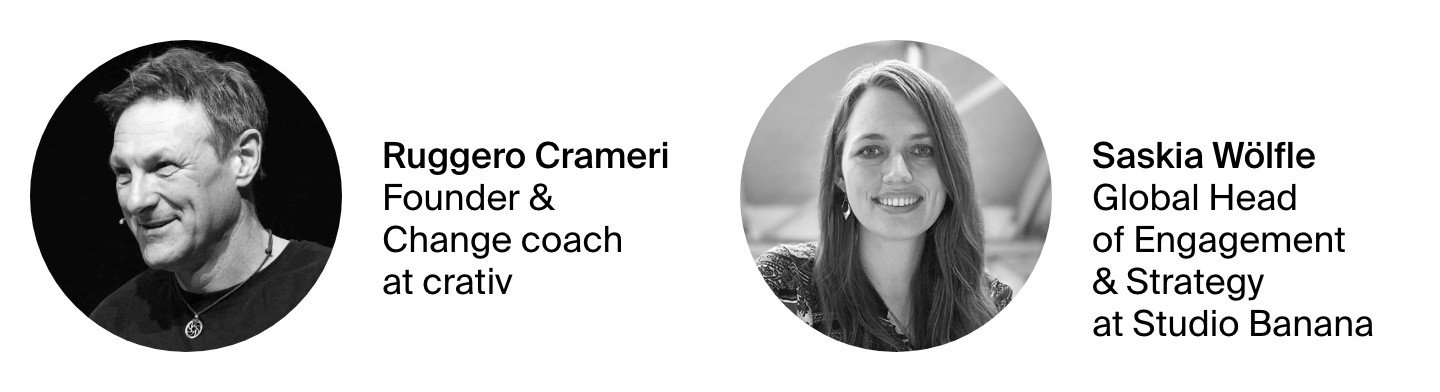
“What we see in many projects today is that the focus tends to be on the ‘Resources’ while the ‘Human’ slowly fades into the background. Yet it is precisely the interplay between the two that creates meaningful, future-oriented work.”
Ruggero Crameri, Founder and Change coach at crativ
The interaction between them Homo Digitalis and Homo Empathicus—and the environments in which these interactions take place—is ultimately what makes the difference. In reality, they are not separate beings, but two dimensions of the same species: humans who must integrate both digital fluency and empathetic intelligence to thrive.
3. Human navigation in a multi-layered environment
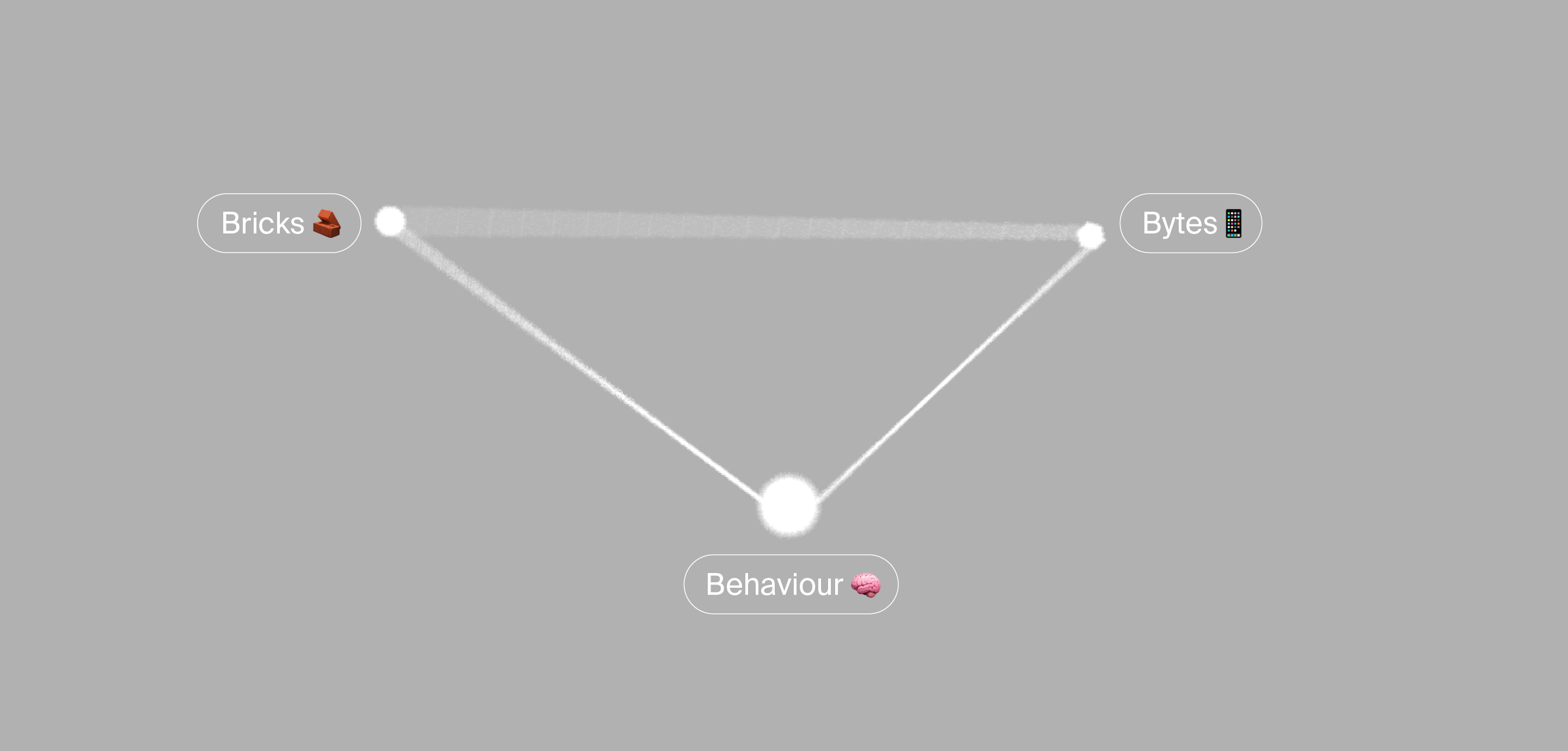
Today, digital tools (BYTES) are setting the tempo, driving unprecedented transformation. Human (BEHAVIOUR) is under pressure to adapt, often generating uncertainty and resistance and physical environments (BRICKS) are being redefined from static containers into dynamic platforms.
If we want to stay adaptable, we need to think less in separate categories and more in terms of one interconnected system where BEHAVIOUR, BYTES and BRICKS constantly shape one another.
Without alignment, organisations may have powerful technologies, inspiring spaces, or talented people, but still struggle to make them function effectively. The challenge is not optimizing each in isolation, but creating one ecosystem where technology accelerates, spaces enable, and people thrive.

4. “The I within the We”: Collective Intelligence is the answer
According to the recent World Economic Forum’s Core Skills Report; there’s a clear shift toward human capabilities required for the modern workforce:
Of the top 12 core skills, only three are primarily analytical or technological (analytical thinking, technological literacy, and AI/big data); while, five are distinctly human-centered (resilience, flexibility, agility, leadership, social influence, motivation, self-awareness, empathy, and curiosity).

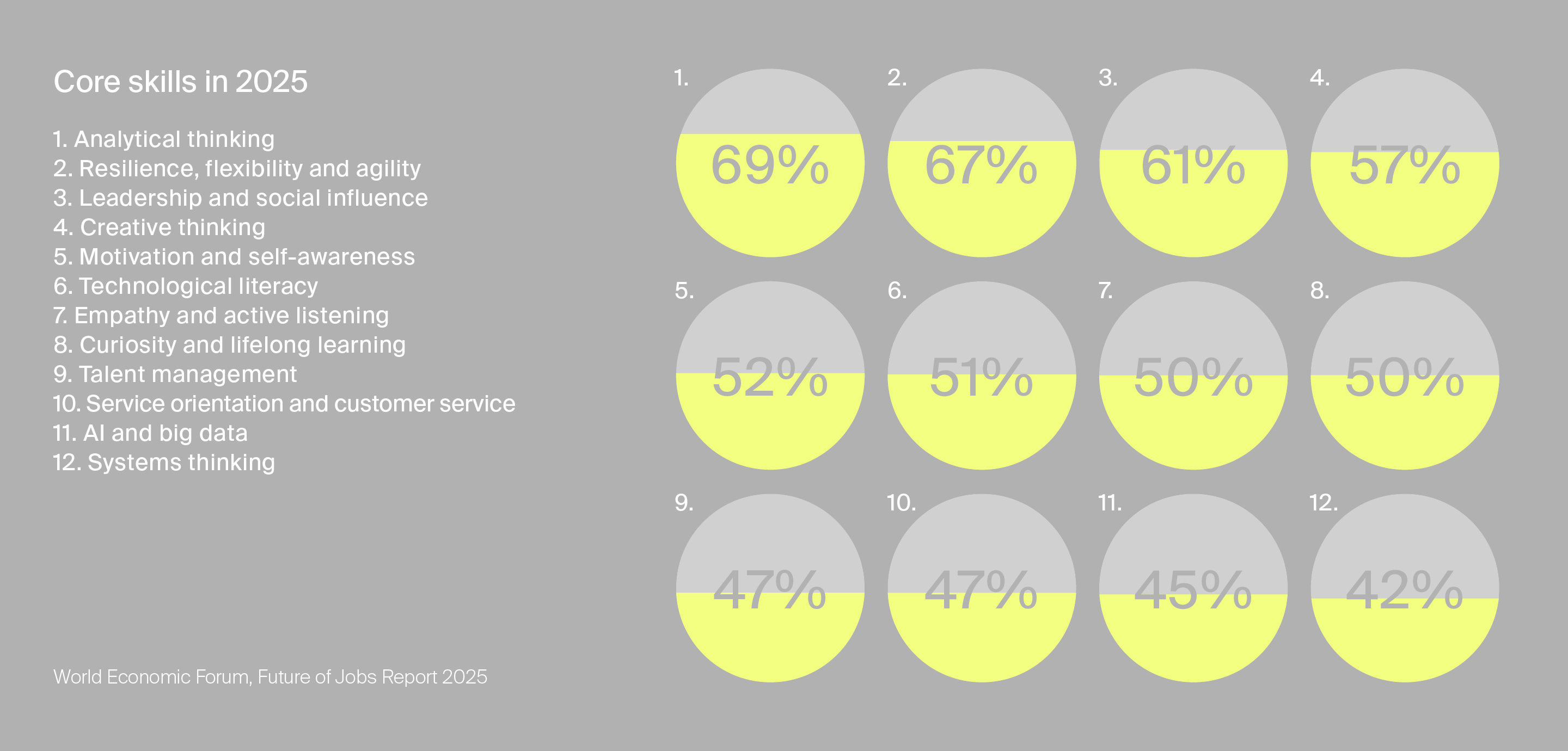
Navigating the future requires a balance of both types of skills. The individual who masters this, can contribute more meaningfully to the ecosystems around them, allowing diverse groups to harness together the power of contextualization, imagination, and evaluation. This is where collective intelligence thrives.
WORDS IN PRACTICE #1
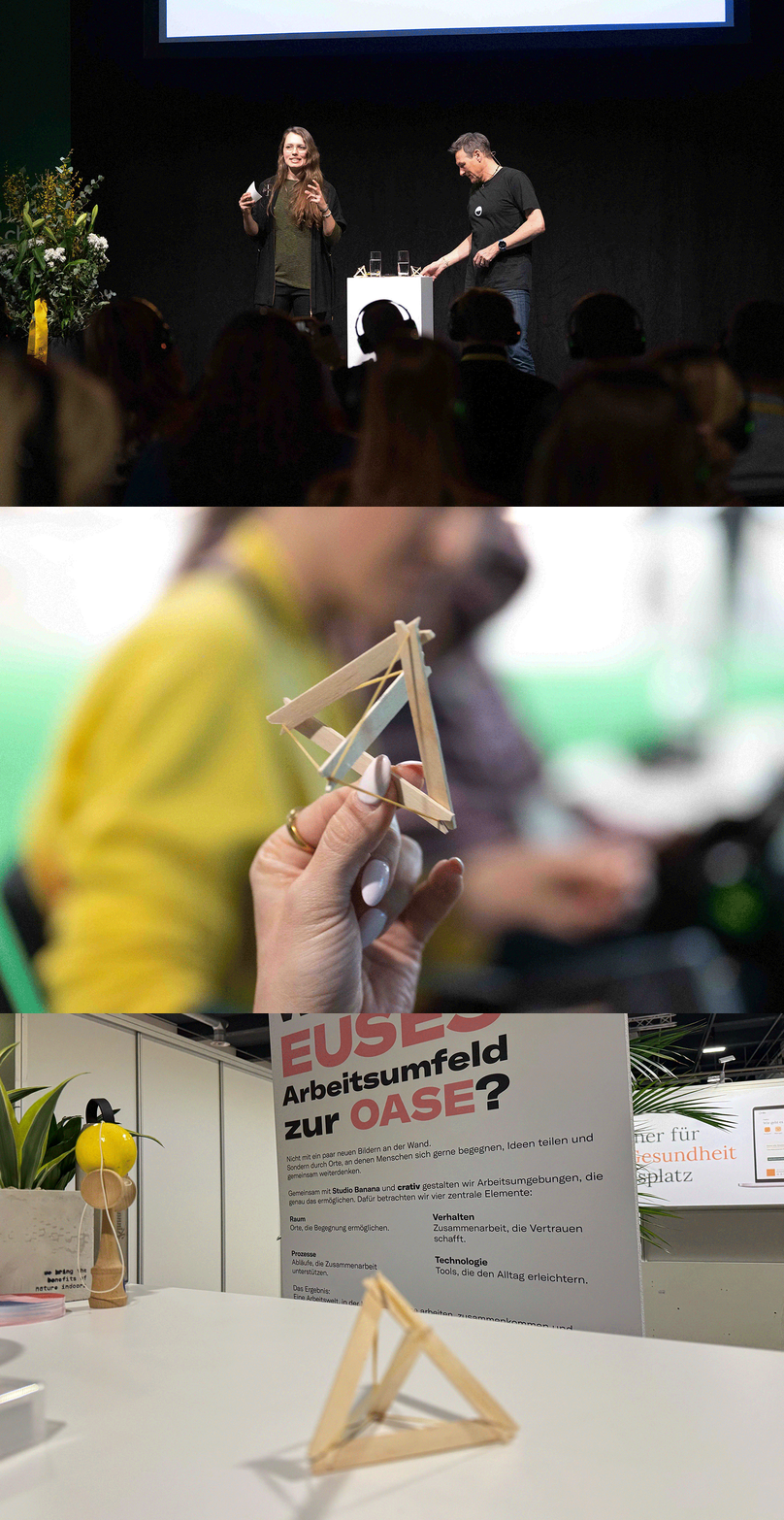
At the 2026 HR Festival event in Zurich, we used a Tensegrity, a puzzle of sticks and rubber bands that requires at least four hands to assemble, as participants must coordinate pulling and holding simultaneously. Despite having only five minutes, strangers quickly formed groups, discussed strategies, and collaborated effectively.
Beyond solving the physical challenge, the exercise sparked conversation, laughter, and immediate human connection. Everyone contributed. That is what we call “the I within the WE”: culture, authenticity, diversity, and encounter demonstrating how interaction and shared purpose activate collective intelligence.
Diverse, decentralized human interaction outperforms artificial intelligence alone. Without a supportive culture and collective human intelligence, AI cannot lead to success.
5. Workspace and format design as a catalyst for interaction
People may be willing to collaborate, but meaningful connection only emerges under the right conditions. Human behaviour evolves far more slowly than digital tools, creating a gap that organizations must consciously bridge. That’s why workplaces need to be designed for adaptability, able to respond to rapid technological change while supporting staff needs.
Collective intelligence requires a trigger, and the physical environment is often the first “nudge” that prompts people to pause, engage, and connect. This is why simple intentional design choices are powerful catalysts: they can accommodate different rhythms of human behaviour while creating opportunities for serendipitous encounters and knowledge sharing.
“Design must move beyond rigid office structures towards consciously curated formats or platforms to prioritize openness, interaction, and collaboration—creating environments where
exchange can happen naturally”.
Saskia Wölfle, Global Head of Engagement & Strategy at Studio Banana
WORDS IN PRACTICE #2
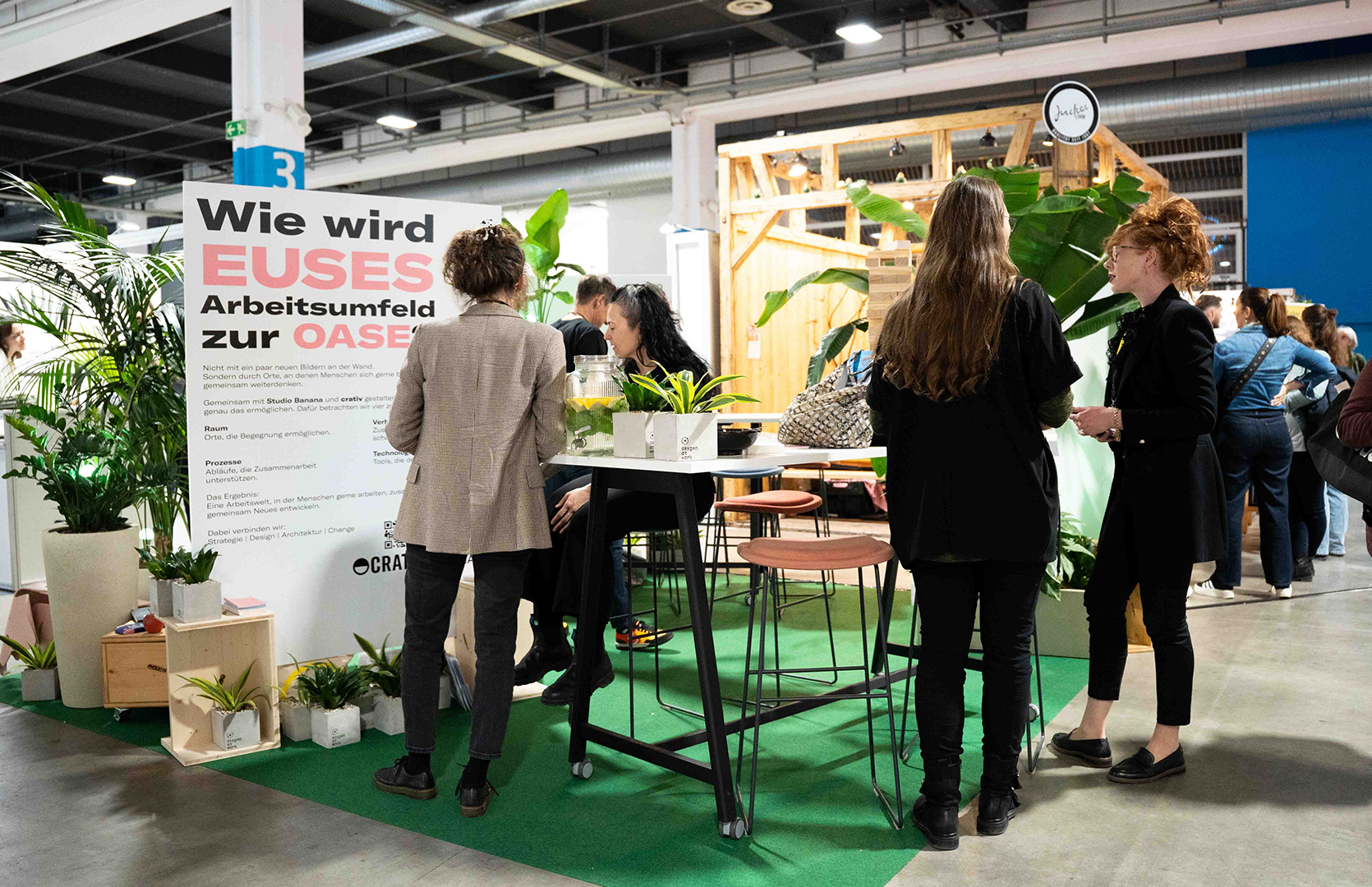
A trade fair booth can become an oasis—where people connect, share knowledge, and feel at ease. Inspired by this, we created a green-filled stand for the HR Festival together with Oxygen at Work and Haworth. Throughout the event, visitors often asked to step inside for a quiet moment.
Those pauses frequently turned into spontaneous conversations and meaningful connections, showing how even busy environments can foster human interaction when designed with care.
6. Collective intelligence is nurtured by rituals
However, intentionally designed spaces are only part of the equation. Connection does not happen automatically. To activate interaction, we also need methods, rituals, and shared experiences that encourage people to participate, engage, and build relationships.
Places frame behaviour. Tools enable action. But rituals truly bring it to life.
Whether it’s a team gathering, a coffee call, a shared challenge, or a moment of celebration, rituals create opportunities for people to connect, build trust, and develop a sense of belonging. They transform spaces from passive settings into active communities.
And importantly, rituals introduce an element that is often underestimated: fun. Playfulness, enjoyment, and shared experiences are powerful drivers of engagement, creativity, and human achievement. When people enjoy being together, collaboration becomes more natural and collective intelligence can flourish.
This human connection becomes even more valuable in an era of rapid technological evolution, where meaningful exchange can serve as an anchor of stability, a platform for knowledge sharing, and a catalyst for fresh thinking—ultimately driving organisations and their cultures forward.
WORDS IN PRACTICE #3
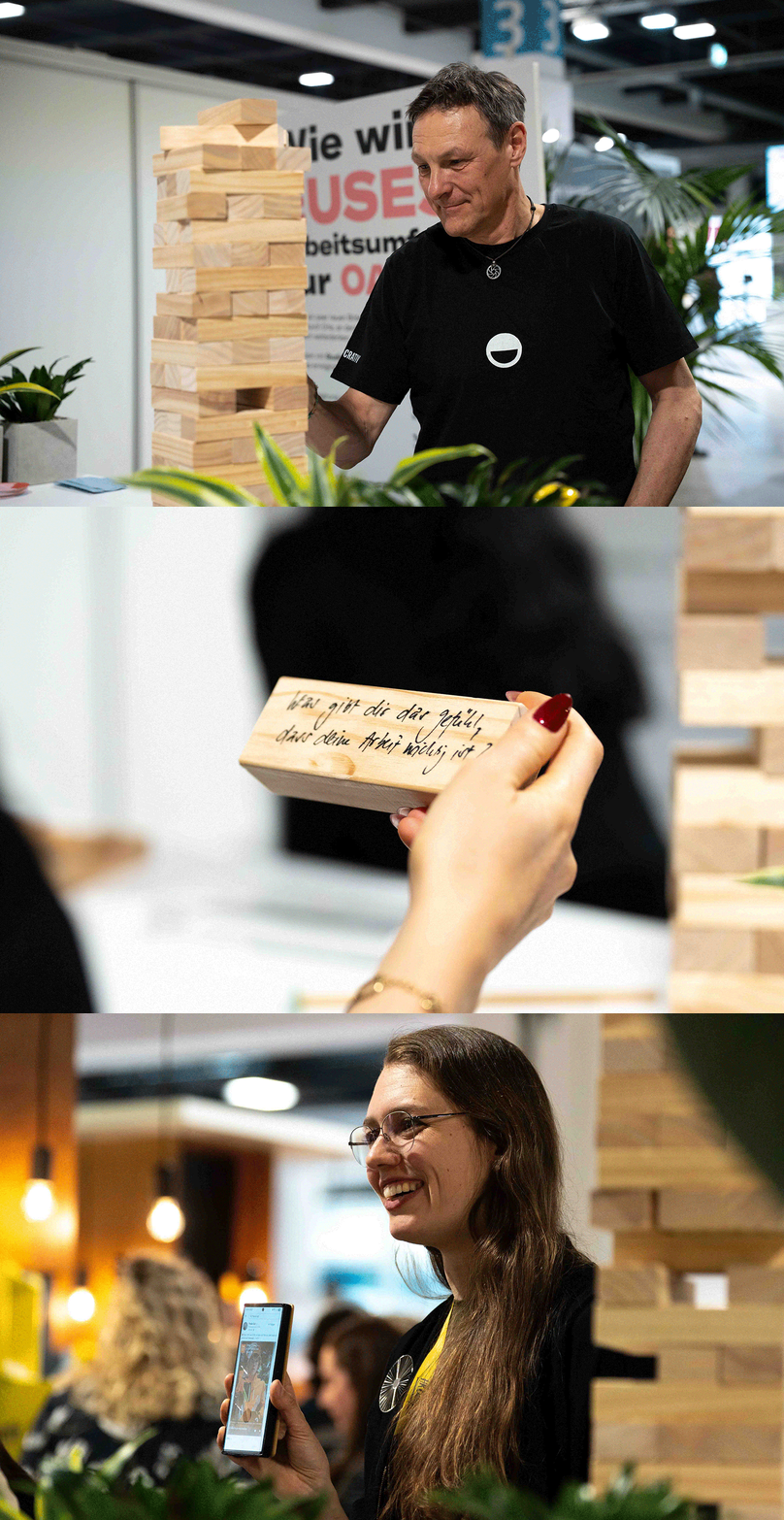
At our client workshops, we use a Reflective Jenga as a ritual. Each block contains a question, turning a simple game into a catalyst for conversation and connection.
Over time, these check-in questions have become a powerful tool for strengthening belonging and helping people connect beyond their roles. By creating space for personal stories and shared experiences, a simple ritual can build deeper relationships and a stronger sense of community.