Workplace strategy for the future: design insights that matter
Insights | 18 August, 2025
How modern workspaces are being redefined by human-centered design
As work dynamics become more hybrid, the role of physical space design (from office layout to interior architecture) becomes increasingly strategic. The future of workplace design isn’t just about where employees work, but by how they collaborate, connect and thrive. Workplace transformation today is driven by both technological innovation and cultural evolution. Successful office design architecture must go beyond aesthetics or basic layout: it must encompass functionality to enable meaningful experiences and user centered interactions. Whether redesigning a corporate interior, planning an office refurbishment, or setting up a new flexible workspace, the design must support not just productivity, but people.
What are the most influential factors guiding a successful workplace transformation design? Here, we shed light on some of the most important ones:
Designing workspaces with purpose, not just for productivity
Every successful workplace design begins with an activity-based working mindset and a user-centered approach. By deeply understanding a company’s unique culture, day-to-day workflows, user needs, and organizational dynamics, design can become a catalyst for performance and become a true driver of performance. The productivity-focused lean configuration of a work environment, based on a detailed understanding of working methods and behaviours, should reflect and enable the flow of information and collaboration between teams. From agile working layouts to flexible workstations, space must be configured to support that flow and adapt to different needs over time. Unlocking an organization’s full potential starts with creating a flexible, responsive workspace architecture that adapts to its work dynamics—not the other way around.
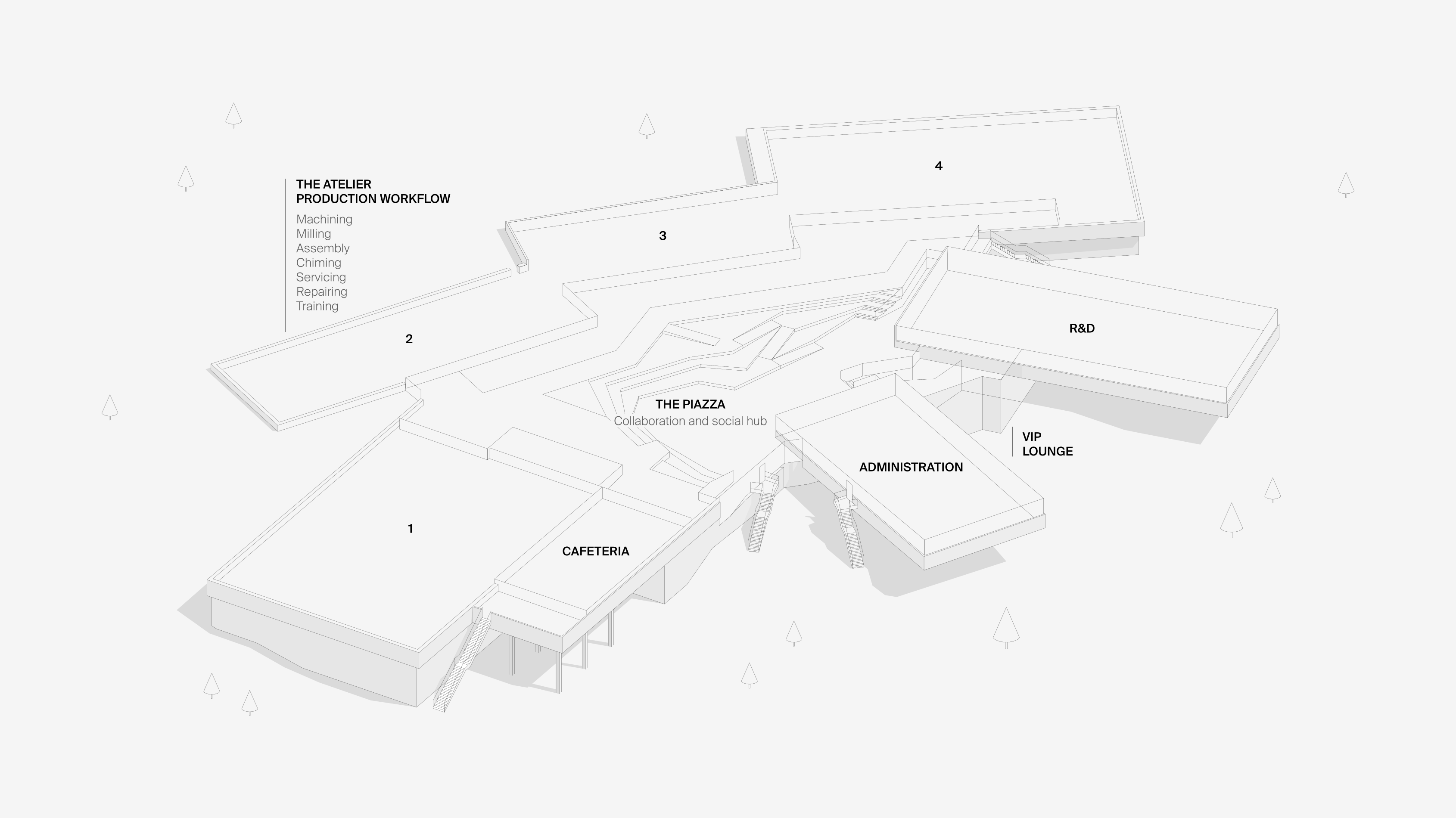
In Audemar’s Piguet Manufacture Le Locle, the production area is strategically designed as an innovation lab to optimize the industrial workflow efficiency.
2. Bringing brand values to life through interior design
The brand culture is a unique identity of an organization and workplace interior design can be a powerful tool for expressing and reinforcing that business spirit. The workplace is an ongoing narrative of a brand. Every design decision—from workspace architecture and spatial layout to furniture design—tells the organization’s ethos and values. A community-focused workplace design strategy fostering mentorship, camaraderie, and a sense of belonging are key components of a successful modern office.
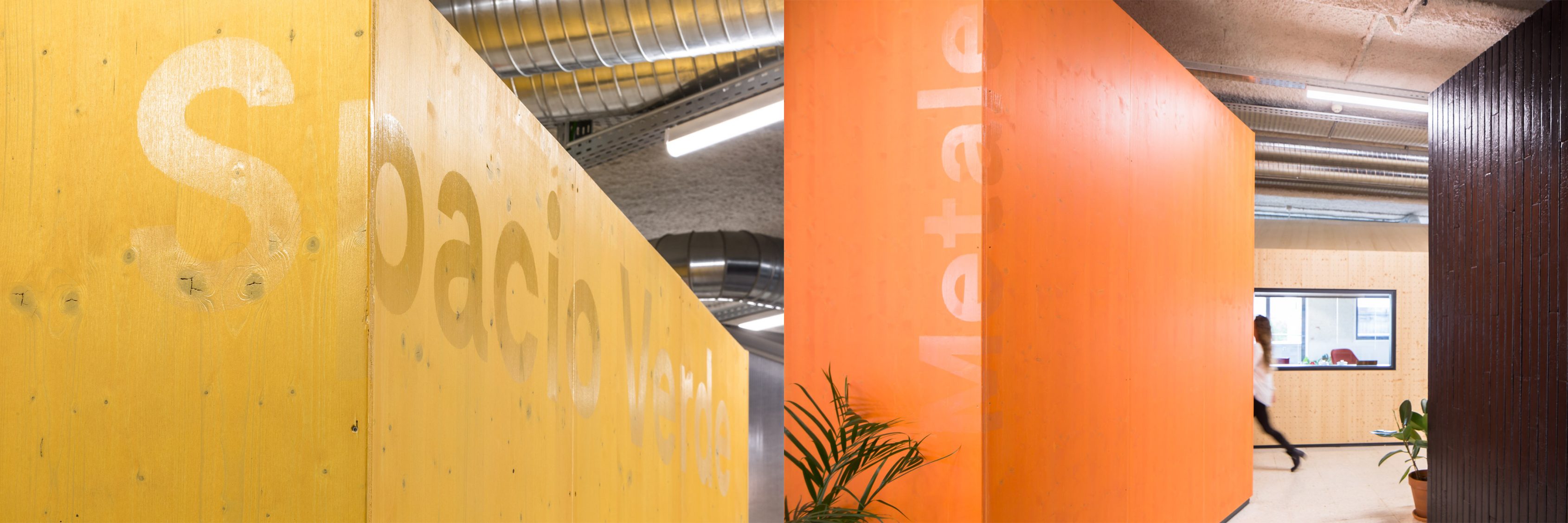
McCann’s headquarters in Madrid features a seamlessly integrated wayfinding system—combining space naming with orientation, landmark, and inspiration signage—fully aligned with the architecture and the company’s identity.
3. Workplace wellness can be a metric of performance
Well-being is not an add-on—it’s the infrastructure of performance. From light and air to rest, flexibility and social belonging, holistic well-being is integral to the modern workplace design. From the most tangible measures such as adjustable seating and desks, good air quality or biophilic features like plants and natural light, to less evident dimensions such as community life, holistic well-being encompasses multiple touchpoints that extend beyond the traditional boundaries of the work environment. Staff happiness, healthy habits, motivation and grit all contribute in critical ways to the organization’s performance. Promoting a sense of social belonging and identification through a strategic stakeholder engagement or change management design becomes key for staff.

By blending hospitality-inspired elements with flexible, collaborative zones, the Morilla’s headquarters in Barcelona fosters a strong sense of belonging and engagement across the organisation
4. The future of work is flexible and people-oriented
As technology reshapes how we work, flexible, human-centered design blending digital and physical experiences becomes crucial. A hybrid workplace design supporting a range of work modes with diverse zones for focus, collaboration and even relaxation can offer a responsive ecosystem where individuals can choose the best setting for each task at each moment, with the most suitable conditions needed. Such spaces can be adaptive and intelligent enough to respond to future needs, even those not yet identified. As a result, this balanced ecology of different purposes empowers people to learn, share, discuss, concentrate, create or relax and eventually drive innovation.
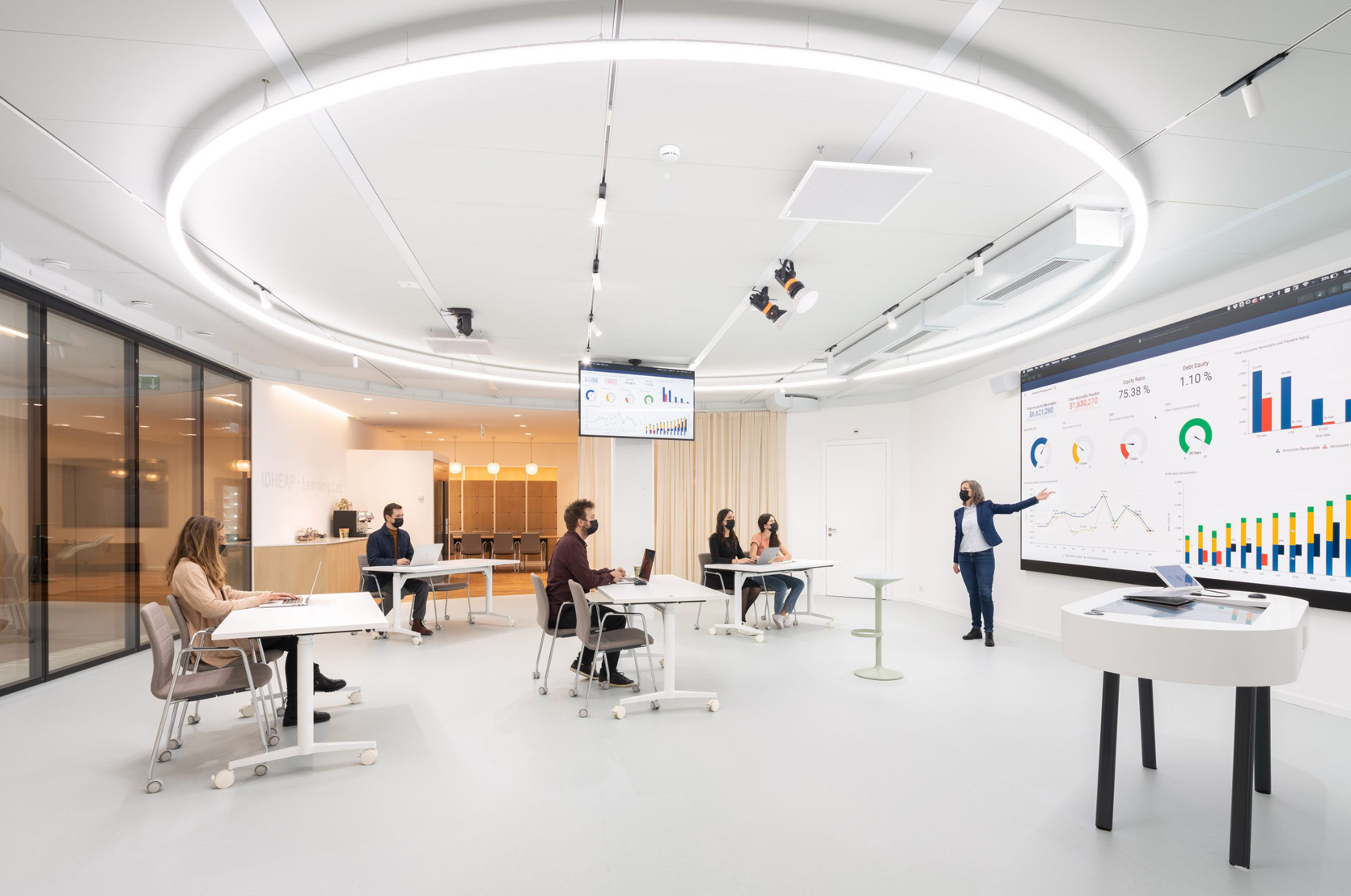
IDHEAP is a Learning Lab that transcends traditional modes of sharing knowledge. Designed as an open physical and digital space for hybrid learning, it combines the warm, welcoming feel of a modern lounge, and the disruptive edge of a classroom of the future.
5. An effective workplace design starts with a clever space optimization
You wouldn’t hire someone to do just one task—so why expect your office space to serve only one function? Today, optimizing real estate means moving beyond square footage as the sole metric. The modern office must be multi-functional and adaptive. Polyvalent work environments offer flexible, multi-use spaces that adapt to shifting needs. With smart furniture, pop-up elements, and time-based rather than location-based activation, each area can support different tasks throughout the day or week, increasing space efficiency and getting more value from every square meter.